It is a weaker fit if you want a low-cost, low-effort, or desk-only business. A Liquid Green franchise has an estimated start-up investment of $136,000 to $194,000, and no insulation experience is required.
Not every good business is a good fit for you.
That matters most when you are new to franchising. You are not only judging the industry. You are judging whether you can run it.
This guide helps you answer that question honestly. It covers who spray foam suits, who it does not, and how to check your own fit before you invest.
The Short Answer: It Depends on Four Things
Spray foam is a strong beginner opportunity when four things line up.
1. Money
You can fund the start-up cost and a cash reserve.
2. Role
You are comfortable leading a trade business, even if you never spray a single job yourself.
3. Skills
You are willing to learn a technical, safety-focused trade.
4. Market
Your territory has steady demand for insulation work.
If all four fit, spray foam deserves a serious look. If one is weak, you can usually fix it before you buy. If two or three are weak, it is better to know now.
Why Spray Foam Appeals to First-Time Owners
Spray foam is a practical, needed service. Property owners want comfortable buildings and lower energy waste. The U.S. Department of Energy notes that insulating and sealing a home can cut energy waste and improve comfort.
It also fits beginners for a second reason. The trade is technical, so a franchise system with real training removes a big barrier. You do not have to figure out equipment, pricing, and safety alone.
But a good industry does not guarantee a good fit. That depends on you.
Who a Spray Foam Franchise Fits Well
People With a Sales, Management, or Customer Service Background
Much of the owner’s day is about people. You talk to homeowners, bid jobs, manage a crew, and build relationships with builders and contractors.
If you have led teams or sold services, many of those skills carry over. The technical side can be taught.
Career Changers Who Want a Hands-On Business
Some people leave office jobs because they want real work and real results. Spray foam offers visible, finished projects.
You can lead the business without doing every job yourself. Still, you should be comfortable around job sites and field work.
People Who Want a System, Not a Blank Page
A franchise gives you tested processes, training, and ongoing support. That is a big help if you have never built a business before.
Curious how this compares to going alone? See <a href="/blog/franchise-vs-starting-your-own">franchise vs. starting your own</a>.
Who May Want to Think Twice
Being honest about fit saves money. Spray foam may not suit you if:
You want a business you can run entirely from a laptop.
You are not comfortable with physical, job-site work and safety rules.
You cannot cover the start-up cost plus a cash reserve.
You want guaranteed results or fast profit.
No franchise guarantees income. Results depend on your market, your management, and your effort.
Quick Fit Check
| Area | Likely a good fit if | May not be a fit if |
|---|---|---|
| Money | You can fund the investment and a 2- to 3-month cash reserve | You would need to stretch every dollar just to open |
| Daily work | You like leading a crew, bidding, and meeting customers | You want a desk-only role |
| Skills | You will commit to technical and safety training | You want to skip the learning curve |
| Market | Your area has steady building, renovation, and energy-saving demand | Demand is thin or already crowded |
| Mindset | You accept risk and will follow a system | You expect guaranteed income |
Fit Check 1: Can You Afford It?
Spray foam takes real upfront investment. It needs specialized equipment, a vehicle, inventory, and training.
For Liquid Green, the estimated start-up investment runs from $136,000 to $194,000. Confirm current figures in the Franchise Disclosure Document (FDD). For the line-by-line view, see our <a href="/blog/cost-to-start-spray-foam-franchise">spray foam franchise cost breakdown</a>.
Also look at two money terms.
Liquid capital:
Cash, or assets you can turn into cash quickly.
Net worth:
Your total assets minus your liabilities.
Franchisors often set minimums for both. Plan for a cash reserve too, since new businesses need time to build steady cash flow.
Not able to pay all in cash? Read about <a href="/blog/spray-foam-franchise-financing">spray foam franchise financing</a>.
Fit Check 2: Will You Enjoy the Work?
The money can work, and the job can still be wrong for you.
A typical owner’s week includes estimates, scheduling, crew coordination, customer calls, and building contractor relationships. Depending on the model, you may also work in the field.
Get a clear picture before you commit. Read what a <a href="/blog/what-a-spray-foam-job-day-looks-like">spray foam job day</a> looks like. Then learn how to <a href="/blog/how-to-bid-spray-foam-jobs">bid spray foam jobs</a> and how to <a href="/blog/how-to-find-customers-spray-foam-business">find customers</a>.
Fit Check 3: Can You Learn a Technical, Safety-Focused Trade?
You do not need to be an installer today. You do need to respect the safety side.
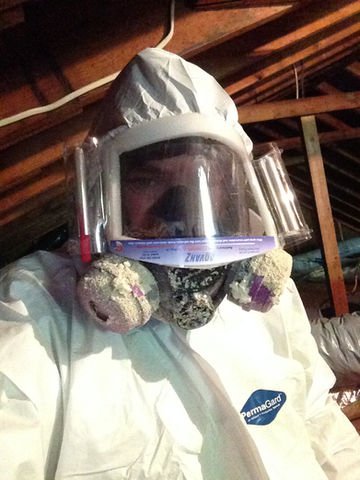
Spray foam installation can expose workers to isocyanates and other hazardous substances.
OSHA describes these <a href="https://www.osha.gov/isocyanates" target="_blank" rel="noopener">workplace hazards</a>. Professional businesses need worker training, ventilation, respiratory protection, and protective equipment.
A good franchisor teaches this clearly. Look for training in equipment, application, safety, estimating, and hiring. The Spray Polyurethane Foam Alliance also offers training and accreditation resources.
For more, read: <a href="/blog/is-spray-foam-insulation-safe">Is spray foam insulation safe?</a>
Fit Check 4: Does Your Local Market Support It?
Even a strong franchise struggles without demand. Check housing age, building and renovation activity, climate, and how many insulation contractors already work nearby. Think about how you could stand out through service, speed, and contractor partnerships.
Spray foam also is not right for every property. The best insulation approach depends on climate, building design, moisture control, and local codes.
Fit Check 5: Is the Franchise Itself Strong?
A good industry still needs a good franchisor. Judge it on evidence, not sales claims.
Three FDD sections help most:
Item 11:
Training, advertising, and franchisor support
Item 19:
Financial performance information, if provided
Item 20:
Locations, openings, closures, and ownership changes
New to the FDD? Read <a href="/blog/spray-foam-franchise-disclosure">how to read Item 19 in a spray foam franchise FDD</a>. Then talk to current owners, using our <a href="/blog/spray-foam-franchise-reviews-buyer-guide">franchise reviews buyer guide</a>.
Under the FTC Franchise Rule, you must receive the FDD at least 14 calendar days before you sign a binding agreement or pay the franchisor. A franchise attorney and an accountant can review it with you.
What About Profit?
Fit is also about whether the economics make sense for you. A single margin number rarely tells the full story.
Profit depends on material costs, crew use, job pricing, and overhead. See whether a <a href="/blog/is-spray-foam-business-profitable">spray foam business is profitable</a> for a closer look.
Your Self-Check: 8 Questions
Answer these honestly. They show quickly whether spray foam fits you.
1. Can I fund the start-up investment and a cash reserve?
2. Am I comfortable leading a crew and dealing with customers?
3. Will I commit to technical and safety training?
4. Does my area have steady building and renovation demand?
5. Do I want to follow a proven system?
6. Can I accept the risk that results are not guaranteed?
7. Have I read the FDD and talked to current owners?
8. Would I be proud to own this business in five years?
Mostly yes? Spray foam may be a strong fit. Several no answers? Fix those gaps first, or look at another model.
Your Next Steps
1. Compare franchise brands and investment requirements.
2. Study demand in your territory.
3. Read the FDD with an attorney and an accountant.
4. Call current franchise owners.
5. Review training, safety, and ongoing fees.
Ready to see if it fits? <a href="/kit">Request the Liquid Green franchise kit</a>.
Frequently Asked Questions
<em>Disclosure: This article is for general information only and is not legal or financial advice. Dollar figures are estimates. Review the current Liquid Green FDD for official figures and terms.</em>